
You’ve stood in that supplement aisle. Dozens of tubs, dozens of promises, and a label full of numbers that mean nothing until someone actually explains them. Whey Protein Powder is one of the most researched supplements on the market, and also one of the most confusing to shop for — not because the science is unclear, but because the marketing muddies it.
This guide cuts through it. You’ll walk away knowing exactly what Whey Protein Powder is, what type suits your goals and your stomach, how much you truly need, when to take it, and how not to spend premium rates for minor differences. What Is Whey Protein, Exactly?
Whey Protein Powder is a group of proteins found in milk. When milk is turned into cheese, it separates into curds (which become the cheese) and a liquid byproduct called whey. That liquid whey is filtered, dried, and turned into the powder you scoop into your shaker bottle.
It’s considered a “complete” protein, meaning it contains all nine essential amino acids your body can’t produce on its own. It also digests quickly compared to other protein sources, which is part of why it became the default post-workout choice for decades of gym-goers.
The Three Main Types of Whey Protein Powder (and Which One You Actually Need)
This is where most buying decisions go wrong. People assume “isolate” is automatically better than “concentrate” because it costs more. That’s not quite right — each type is suited to a different situation.
Whey Protein Concentrate (WPC) is the least processed and least expensive form, typically containing somewhere between <cite index= “4-1”>70 to 80% protein by weight</cite>, with the remainder made up of carbohydrates (largely lactose) and a small amount of fat. Because it retains more of the whole-food components of milk, some people find it tastes creamier. It’s also, as one review put it, something of a <cite index= “11-1″>” trial run” protein — many newcomers start here, and if they tolerate it well, they may never need to switch to a costlier form</cite>.
Whey Protein Isolate (WPI) goes through additional filtration that strips out more fat and lactose, pushing protein content <cite index= “4-1”>to 90% or higher</cite>. If you’re watching total carbs and fat closely, or you’re mildly lactose-sensitive but not fully intolerant, isolate is usually the better fit. You’re paying more per scoop for that extra filtration step.
Whey Protein Hydrolysate (WPH), also called hydrolyzed whey, takes isolate (or occasionally concentrate) and breaks the protein chains down further through a process called hydrolysis — essentially pre-digesting it. <cite index=”2-1″>The proteins are broken into smaller peptides that absorb faster</cite>, and hydrolyzed whey also tends to be <cite index=”7-1″>less allergenic than other whey forms</cite>. It’s the most expensive of the three and often used in infant formula and clinical nutrition products, where digestibility matters most. For the average lifter, the faster absorption rarely justifies the price jump.
A quick way to decide between them:
TypeProtein contentLactose/fatBest forRelative cost
Concentrate (WPC) ~70-80% Higher Budget-conscious, no lactose issues $
Isolate (WPI) ~90%+ Low Lactose-sensitive, cutting carbs $$
Hydrolysate (WPH) ~90%+ Very low Sensitive stomachs, rapid absorption needs $$$
If you’re lactose intolerant rather than just sensitive, note that isolate reduces lactose significantly but doesn’t eliminate it — and if you have an actual milk allergy (not intolerance), whey isn’t the right supplement regardless of type, since the allergy is to the protein itself, not the sugar.
Does Whey Protein Powder Actually Build Muscle?
Yes, but with an important caveat: Whey Protein Powder doesn’t build muscle by itself. Resistance training creates the stimulus; protein — including whey — supplies the raw material for repair and growth. Take away the training and the powder is just a convenient way to hit a macro number.
That said, the research on total daily protein intake for muscle growth is fairly consistent. A large systematic review and meta-analysis of 74 randomized controlled trials found that increasing daily protein intake meaningfully enhanced gains in lean body mass among people doing resistance training, with the strongest effects seen at intakes <cite index= “14-1”>at or above 1.6 g/kg/day</cite> for younger adults. The International Society of Sports Nutrition puts the practical range at roughly <cite index= “20-1”>1.1 to 2 grams per kilogram of body weight per day, split across four to six meals</cite>.
To translate that into something usable: a 75 kg (165 lb) person training for muscle gain would generally target somewhere between 120 and 165 grams of protein per day, depending on training intensity and goals. Whey doesn’t need to supply all of that — most of it should still come from whole food — but it’s an efficient way to close the gap on busy days.
How Much Whey Protein Powder Should You Take?
Per serving, most research points to a ceiling of usefulness rather than “more is always better.” One frequently cited analysis on per-meal protein distribution concluded that consuming <cite index= “15-1”>roughly 0.4 g/kg per meal across at least four meals a day</cite> is a practical way to reach the higher end of daily protein targets, and that going above roughly <cite index= “20-1”>20 to 40 grams in a single sitting</cite> shows diminishing returns for muscle protein synthesis specifically, even though the extra protein still gets used elsewhere in the body.
In practice, this means a single 25-30 gram scoop of whey — which is what most standard servings contain — is doing essentially everything it can do for muscle repair in one sitting. Doubling the scoop size doesn’t double the muscle-building effect; it mostly just adds calories.
When Should You Take It? Timing, Explained Without the Hype
More recent research has considerably walked back the idea of the “30-minute anabolic window” that has dominated fitness culture for years. Total daily protein intake counts considerably more than the exact minute you drink your shake. That said, there’s still a practical reason for timing.
- Post-workout is still a reasonable default — it’s a convenient, easy-to-digest way to hit your numbers when you may not feel like eating a full meal right after training.
- Spread across the day matters more than any single dose. Hitting 20-40 grams of protein across four to six meals or snacks tends to support muscle protein synthesis better than front- or back-loading it into one or two large meals.
- Before bed can help if your last meal was light or several hours before sleep, since a slower-digesting protein (or a whey/casein blend) can support overnight muscle repair.
If you only take one thing from this section: don’t stress about the clock. Stress about your daily total.
Common Side Effects and Who Should Be Cautious
Whey Protein Powder is well-tolerated by most people, but it’s not without downsides for certain groups.
Digestive discomfort — bloating, gas, cramping — is the most common complaint, and it’s usually a lactose issue rather than a protein issue. If this happens to you, isolate or hydrolysate (both lower in lactose) are worth trying before giving up on whey altogether.
Milk allergy is different from lactose intolerance and is a hard no for any whey product, since the immune reaction is to the milk proteins themselves.
Kidney and liver conditions — if you have pre-existing kidney disease, high protein intake can put additional strain on the kidneys, and you should talk to a doctor before increasing intake significantly. For people with normal kidney function, research hasn’t shown that moderately high protein intake causes kidney damage, but this is genuinely a conversation to have with a healthcare provider rather than a supplement label.
Added sugars and fillers — some flavored whey products pack in far more sugar or artificial additives than people expect. Checking the label matters more than the brand name on the front of the tub.
Whey vs. Other Protein Powders
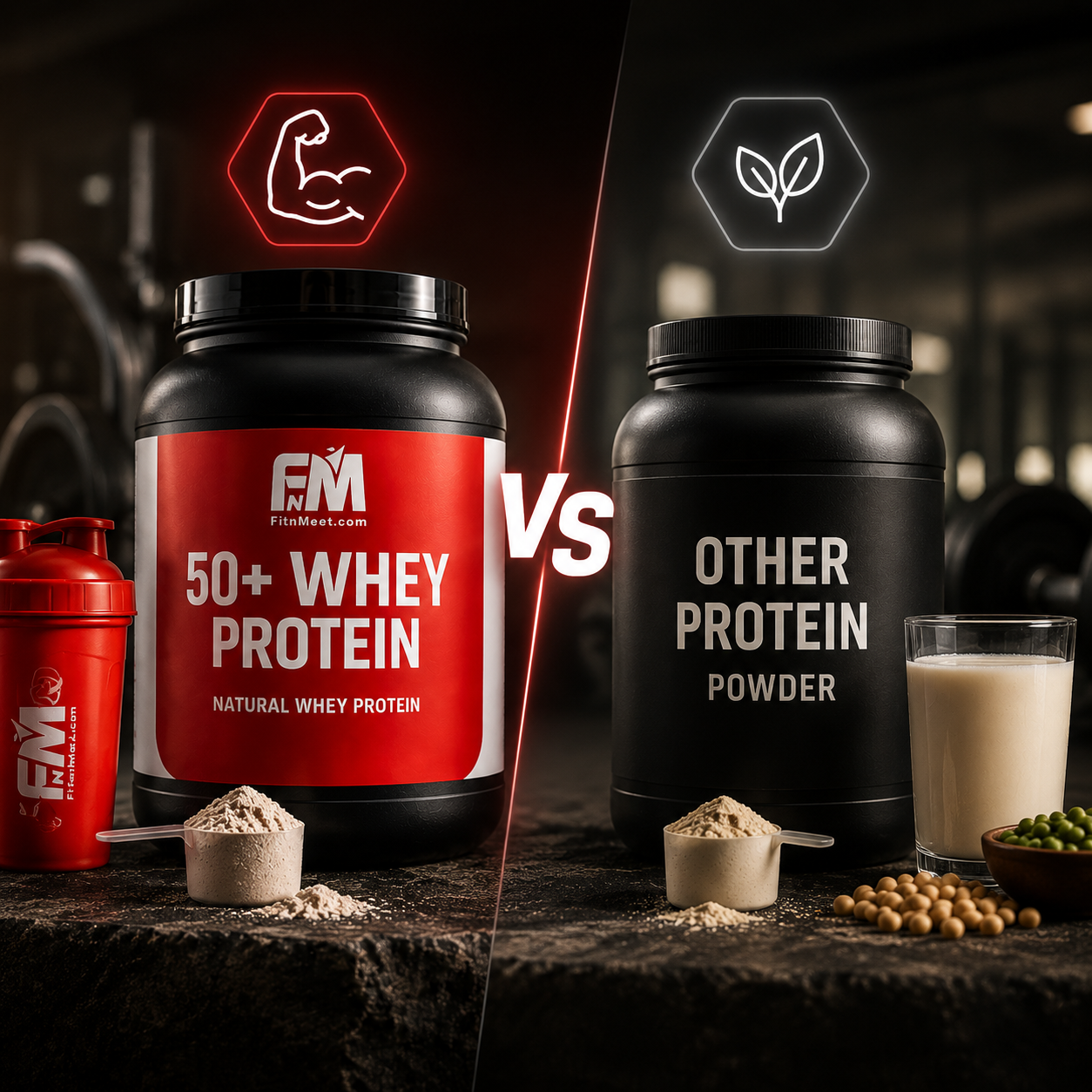
Whey isn’t the only option, and it’s worth knowing where it fits relative to the alternatives:
- Casein, whey’s slower-digesting dairy cousin, releases amino acids over several hours rather than a couple, which is why it’s often recommended before bed rather than post-workout.
- Plant-based proteins (pea, rice, soy, hemp) are the go-to for anyone vegan, lactose intolerant, or who has a dairy allergy. Individually, most plant proteins are missing or low in one or more essential amino acids, but blends (like pea + rice) are typically formulated to cover the gaps.
- Egg white protein is a solid dairy-free complete protein alternative, though usually pricier and less common on shelves.
If digestion, allergies, or dietary preference rule out dairy, a well-formulated plant protein blend can get you to similar outcomes — it just often takes a slightly larger serving to match whey’s protein density.
Is whey protein powder safe to take every day?
Most healthy adults, yeah. The crucial thing is your overall daily protein consumption from all sources, not whether whey itself is “safe” in a vacuum. If you have kidney illness or any other ailment that affects protein metabolism, consult with a doctor first.
Can Whey Protein Powder cause weight gain?
Only in the way any calorie-containing food can — if your total intake exceeds what you burn.Whey Protein Powder itself has a high satiety effect and a higher thermic cost to digest than fat or carbs, which is part of why many people use it as a tool for weight management rather than a cause of weight gain.
Does Whey Protein Powder expire?
Yes. Generally, unopened, it is good for 1-2 years. Once opened, whey protein powder will degrade faster from air and moisture. Watch for clumping, an unpleasant smell or a sour taste.
Is more expensive Whey Protein Powder always better?
Not necessarily. Often the price reflects the processing level (isolates and hydrolysates are more expensive to produce than concentrates), added substances such as digestive enzymes or extra amino acids, and brand marketing. “Don’t just go by price to assume quality. Look at the protein per serving and the ingredient list.
Can I take whey protein without working out?
You can, though its main advantage — supporting muscle repair after resistance training — won’t apply. Without training, it functions more like a convenient way to hit general daily protein targets, which can still be useful for older adults or anyone struggling to eat enough protein through food alone.
What’s the difference between Whey Protein Powder and whey protein isolate on a label?
Unless specified, “whey protein” often refers to concentrate. The word “isolate” means it’s ha been further processed to give you a higher proportion of protein and lower amounts of lactose and fat.
Is Whey Protein Powder bad for your kidneys?
In people with healthy kidney function, current research hasn’t demonstrated that normal-to-moderately-high protein intake causes kidney damage. The concern is specific to people who already have impaired kidney function, where any high-protein diet — supplement or whole food — warrants medical guidance.
Can teenagers or older adults take Whey Protein Powder?
Yeah, typically They can take Whey Protein Powder. But various causes and criteria. Older persons require more protein to avoid losing muscle as they age (sarcopenia), and studies indicate that spreading protein out over three or more meals can be as critical as the total quantity. Whole foods should be the main source of protein for teens, with supplements utilized as a tool on occasion if needed.
Does the flavor or brand actually affect results?
No — the Whey Protein Powder and amino acid profile are what matter physiologically. Flavor and brand affect adherence (whether you’ll actually keep drinking it) and, in the case of added sugars or fillers, your overall diet quality.
Should I take Whey Protein Powder on rest days?
Yes, if you’re working toward a daily protein target. Muscle repair continues on rest days, and total weekly protein intake — not just workout-day intake — is what the research on muscle protein synthesis actually tracks.
The Bottom Line
Whey Protein Powder is a very useful and well-studied tool. It’s not a magic pill, but it’s a practical way to bridge the gap between what you eat and what your workout demands. For most people, concentrate is the logical choice. If you’re managing lactose sensitivity or are tightly regulating your carbs and fat, isolate makes sense. Hydrolysate is a customized enhancement for those with really sensitive digestion or unique therapeutic demands.
The variable that actually determines your results isn’t the tub you buy — it’s whether your total daily protein intake and training are consistent enough, week after week, for your body to use what you’re giving it.