
A zinc and copper supplement combines two essential trace minerals in one formula, usually in a ratio around 10:1 to 15:1 (zinc to copper). The pairing exists for a reason: taking zinc alone over time can deplete your copper levels, since the two minerals compete for absorption. Together, they support immune function, skin health, and energy metabolism safely.
👋 Start here: New to mineral supplements? This guide assumes zero background. You will learn what a zinc and copper supplement does, why the two minerals come as a pair, how much to take, and the mistakes beginners make — all in plain language. No biochemistry degree required.
Zinc and Copper Supplement, Explained Simply
Think of zinc and copper like two friends sharing one taxi: there is only so much room, so if zinc hogs the seat every day, copper gets left behind. That is essentially what happens in your gut. Both minerals use the same absorption doorway, and high zinc intake tells your intestinal cells to make more of a protein (metallothionein) that grabs copper and refuses to let go.
A zinc and copper supplement solves this elegantly by providing both minerals together in a sensible ratio. You get zinc’s benefits — immune support, skin health, taste and smell function — without slowly draining your copper, which you need for energy production, iron handling, and healthy connective tissue.
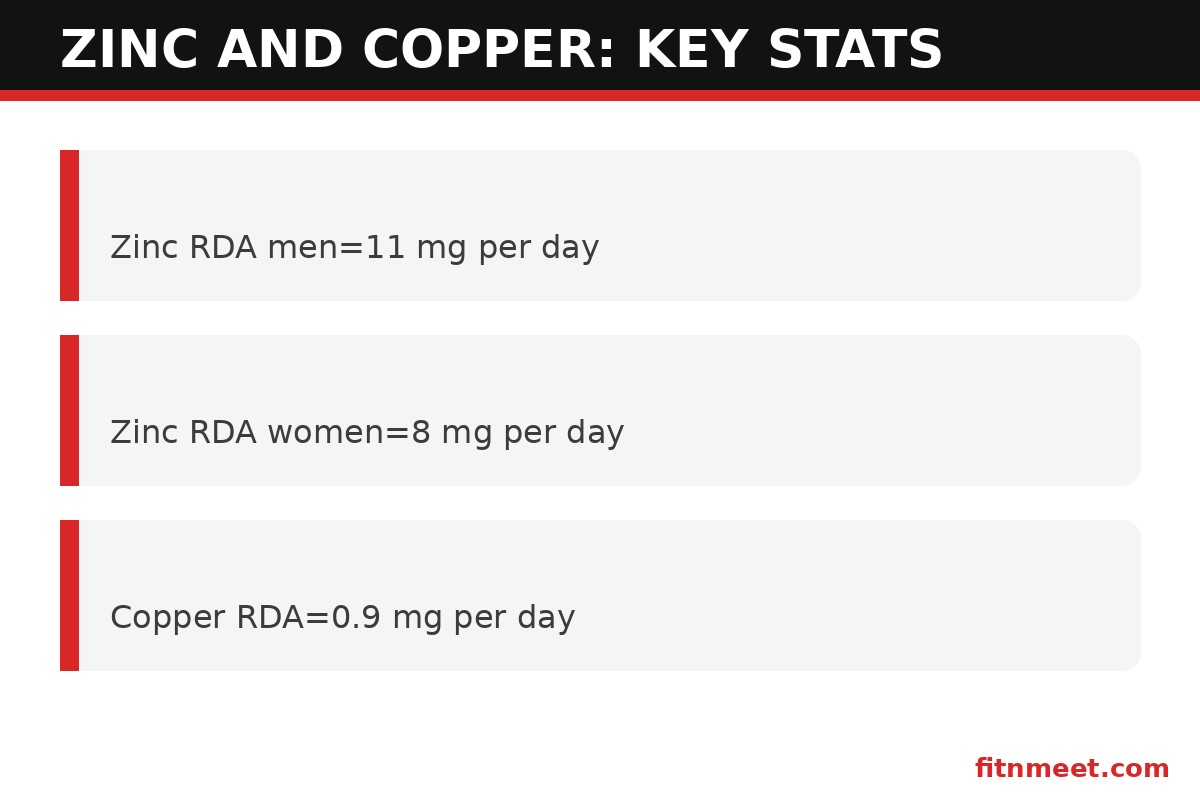
One stat to remember: the adult daily needs are small — 11 mg of zinc for men, 8 mg for women, and just 0.9 mg (900 mcg) of copper for all adults. Tiny amounts, but your body cannot make them, so they must come from food or a zinc and copper supplement every single day.
Why not just take zinc alone?
You can, short-term. But studies show that zinc intakes above ~50 mg/day for several weeks can measurably lower copper status, and copper deficiency causes its own problems: fatigue, anemia that does not respond to iron, and even nerve issues. A zinc and copper supplement is the “set it and forget it” answer — balanced by design.
What does “balance” actually mean?
Most quality formulas use a 10:1 to 15:1 zinc-to-copper ratio — for example, 15 mg zinc with 1 mg copper, or 30 mg zinc with 2 mg copper. This mirrors the ratio research suggests keeps both minerals in healthy ranges. If you see a “zinc” product with no copper and a 50 mg dose, that is a red flag for long-term daily use.
What Is a Zinc and Copper Supplement?
A zinc and copper supplement is a dietary supplement — usually a capsule or tablet — containing both minerals in bioavailable forms. Common forms you will see on labels:
Zinc forms, ranked by absorption
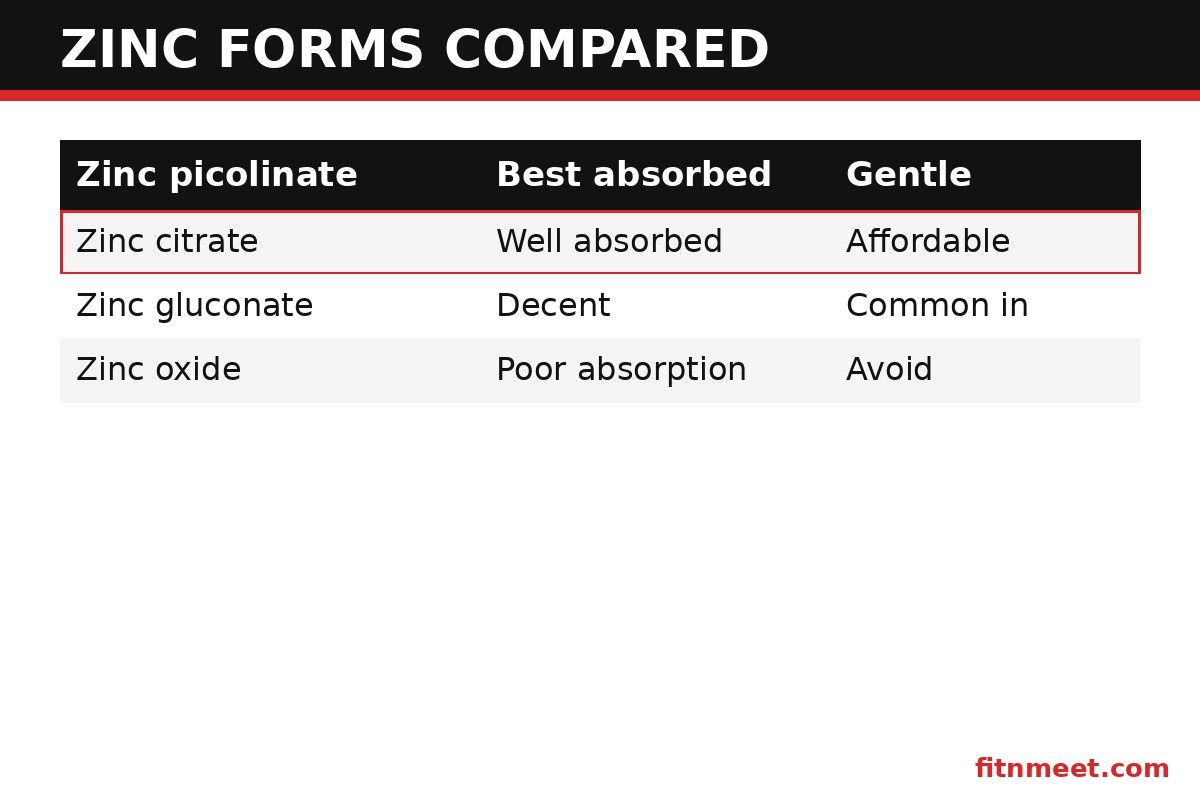
- Zinc picolinate: often cited as the best-absorbed form in comparative studies; a solid default choice in a zinc and copper supplement.
- Zinc citrate: well absorbed, gentle, and affordable — the workhorse of most formulas.
- Zinc gluconate: the form used in many cold lozenges; decent absorption.
- Zinc oxide: cheap but poorly absorbed — common in bargain multivitamins, less ideal in a dedicated zinc and copper supplement.
One stat: zinc picolinate showed ~50% better absorption than zinc gluconate in one often-cited human study — form matters more than most people realize.
Copper forms
- Copper glycinate / bisglycinate: chelated, gentle, well absorbed.
- Copper gluconate: common and effective.
- Copper sulfate: works but harsher on the stomach; less common in quality formulas.
For the mineral-by-mineral science, the NIH Office of Dietary Supplements zinc fact sheet is the gold-standard reference, and Wikipedia’s copper article covers copper’s biological roles clearly.
Why Beginners Should Care About This Pair
If you are new to supplements, you might wonder why this specific combo deserves attention over the dozens of other options. Three beginner-relevant reasons:
You are probably not getting enough zinc from food
Zinc lives mostly in meat, shellfish, legumes, and seeds. Vegetarians, vegans, and anyone eating a lot of processed food commonly fall short — phytates in grains and legumes block zinc absorption, so plant-based eaters may need up to 50% more zinc than meat eaters. A zinc and copper supplement is the simplest fix. For more on mineral-rich eating, explore the FitnMeet nutrition articles.
Athletes lose more of both
Training increases zinc losses through sweat and urine. One study found athletes can lose significant zinc during prolonged exercise, and marginal deficiency shows up as slower recovery, more colds, and flat training energy. If you train hard, a zinc and copper supplement covers a genuine increased need — not a hypothetical one.
Immune seasons are real
Zinc’s role in immune function is among the best-established facts in nutrition: the body needs zinc to develop and activate T-cells. Trials of zinc lozenges suggest they can shorten colds when started early. A daily zinc and copper supplement keeps your baseline status topped up so you are not starting from empty when exposure hits. For more on immune-support habits, browse the FitnMeet health articles.
One stat: an estimated 17% of the global population is at risk of inadequate zinc intake (per published nutrition reviews) — this is not a rare edge case.
👋 Start here: If you eat little meat, train regularly, or catch every cold going around, you are the textbook candidate for a zinc and copper supplement. Keep reading — the 5-step plan below makes starting foolproof.
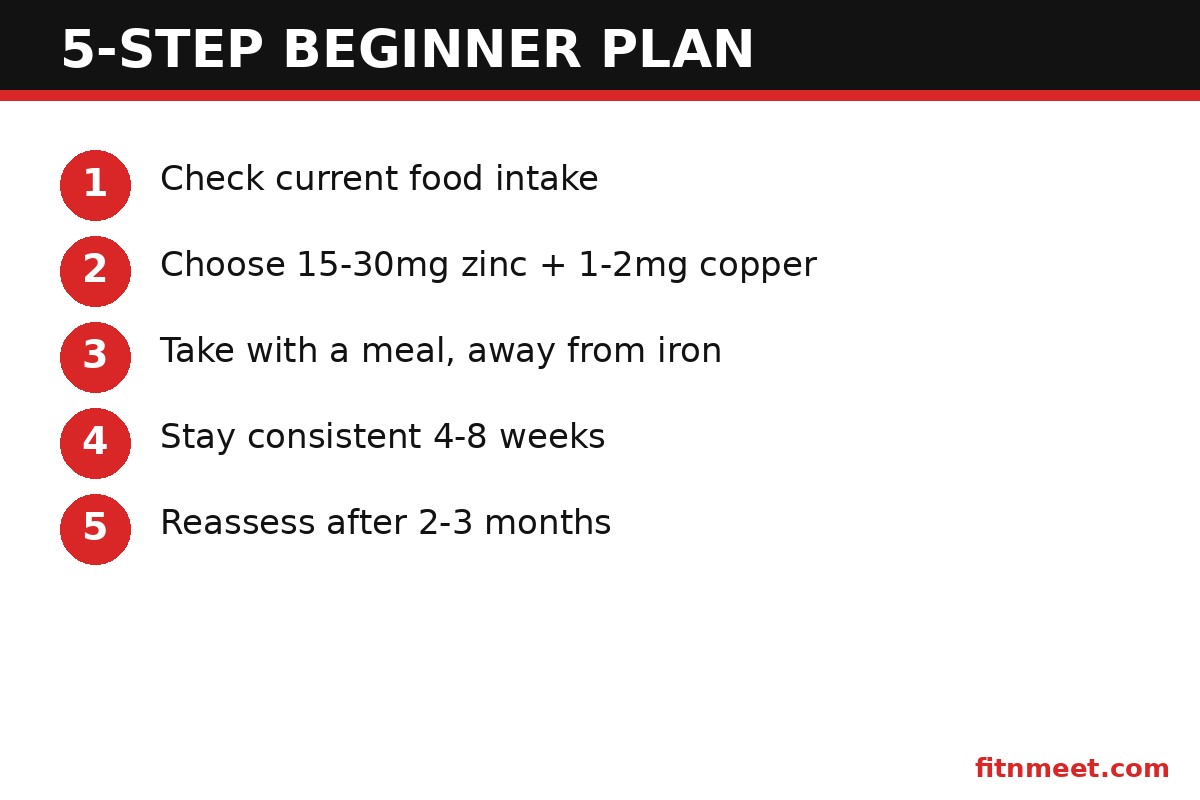
Getting Started: Your 5-Step Beginner Plan
- Step 1: Check your current intake. Track your food for 3 days (any free app works). If you rarely eat meat, shellfish, pumpkin seeds, or legumes, you likely need a zinc and copper supplement. If you already take a multivitamin with 10–15 mg zinc, you may only need a small top-up, not a full dose.
- Step 2: Choose the right formula. Look for 15–30 mg zinc (picolinate or citrate) with 1–2 mg copper (glycinate or gluconate) — roughly a 15:1 ratio. Avoid zinc oxide as the main form. One capsule daily beats complicated stacks for beginners.
- Step 3: Time it correctly. Take your zinc and copper supplement with a meal — ideally lunch or dinner — to avoid nausea (zinc on an empty stomach bothers many people). Keep it 2+ hours away from iron supplements, calcium-heavy meals, or certain antibiotics, which compete for absorption.
- Step 4: Give it 4–8 weeks. Mineral repletion is gradual. Noticeable changes — better skin, fewer sniffles, improved taste/smell if those were dull — typically emerge after a month of consistent use. Set a phone reminder; consistency is the whole game.
- Step 5: Reassess, do not autopilot. After 2–3 months, ask: do I still need this? If your diet improved or training load dropped, you might step down to food-only. A zinc and copper supplement is a tool, not a life sentence.
Benefits of a Zinc and Copper Supplement
Immune defense
Zinc is required for the normal development and function of neutrophils, natural killer cells, and T-lymphocytes — the core of your immune system. Copper, meanwhile, supports the enzymes that protect immune cells from oxidative damage during the fight. Together in a zinc and copper supplement, they cover both the soldiers and their armor.
One stat: zinc deficiency is associated with measurably weaker immune responses, and repletion restores them — one of the clearest cause-and-effect relationships in mineral nutrition.
Skin, hair, and wound healing
Zinc regulates oil glands, supports collagen formation, and speeds wound healing — dermatologists have used zinc for acne and skin repair for decades. Copper is essential for cross-linking collagen and elastin, the proteins that keep skin firm. A zinc and copper supplement addresses skin from both the zinc side (oil and repair) and the copper side (structure).
Energy and metabolism
Copper is a cofactor for cytochrome c oxidase, a key enzyme in the mitochondrial energy chain — literally how your cells make ATP. Zinc participates in over 300 enzymatic reactions, including those governing carbohydrate and protein metabolism. Low levels of either can masquerade as “low energy.”
Taste, smell, and appetite
Zinc deficiency famously dulls taste and smell (it is involved in the relevant receptor proteins). Older adults and heavy trainers sometimes notice food tasting “flat” — and a zinc and copper supplement restoring normal taste is one of the more delightful deficiency-correction stories.
Hormonal and reproductive health
Zinc plays a role in testosterone synthesis and sperm health in men; adequate copper supports iron metabolism, which matters for energy in women. Neither mineral is a hormone booster — they simply remove deficiencies that drag systems down.
Covering your mineral bases works best alongside overall nutrition. Explore FitnMeet’s vitamins collection and health support range to build a complete foundational stack around your zinc and copper supplement.
Common Beginner Mistakes
- Taking zinc on an empty stomach. The number-one beginner complaint — nausea within 30 minutes. Always take your zinc and copper supplement with food.
- Megadosing zinc “for immunity.” More is not better: 50–100 mg zinc daily without copper will deplete copper within weeks. Stick to 15–30 mg in a balanced zinc and copper supplement.
- Ignoring the copper half. Buying a 50 mg zinc-only product for daily use is the classic way to create the exact imbalance a zinc and copper supplement is designed to prevent.
- Taking it with iron or calcium. These minerals compete for absorption. Space your zinc and copper supplement 2+ hours from iron supplements or big dairy/calcium doses.
- Expecting overnight results. Minerals rebuild tissue stores slowly. Judge your zinc and copper supplement at 6–8 weeks, not 6–8 days.
- Choosing zinc oxide to save money. Poor absorption means you are mostly buying expensive urine. Picolinate or citrate costs slightly more and actually works.
- Never reassessing. Supplements should solve problems, not become permanent furniture. Review every few months whether you still need your zinc and copper supplement.
Dosage Basics
Daily targets
| Group | Zinc (RDA) | Copper (RDA) | Typical supplement dose |
|---|---|---|---|
| Adult men | 11 mg | 0.9 mg | 15–30 mg zinc + 1–2 mg copper |
| Adult women | 8 mg | 0.9 mg | 15 mg zinc + 1 mg copper |
| Pregnant women | 11 mg | 1.0 mg | Clinician-guided only |
| Vegetarians/vegans | Up to ~16.5/12 mg* | 0.9 mg | Higher-end zinc in a zinc and copper supplement |
*Suggested higher intake due to phytate-reduced absorption, per nutrition authorities.
Upper limits — respect these
The tolerable upper limit for zinc is 40 mg/day from all sources; for copper it is 10 mg/day. A standard zinc and copper supplement (15–30 mg zinc + 1–2 mg copper) sits comfortably below both. Problems arise when people stack a high-dose zinc product on top of a multivitamin on top of zinc lozenges — add up your total.
One stat: copper deficiency from zinc overuse typically appears after weeks to months of 50+ mg/day zinc without copper — it is a slow drain, which is exactly why the balanced zinc and copper supplement exists.
Safety Notes
- Generally safe at recommended doses. A zinc and copper supplement at 15–30 mg zinc + 1–2 mg copper daily is well within established safe ranges for healthy adults.
- Nausea is the most common side effect — solved by taking it with food.
- Copper overload is rare from supplements but possible with stacking; symptoms include nausea and abdominal pain. Do not combine multiple copper-containing products without adding up totals.
- Medication interactions: zinc can reduce absorption of certain antibiotics (quinolones, tetracyclines) and penicillamine — separate by 2–4 hours. Thiazide diuretics increase zinc excretion.
- Medical conditions: people with Wilson’s disease (copper accumulation disorder) must avoid copper supplements entirely and use zinc only under medical supervision — a critical exception to the “balanced pair” rule.
- Pregnancy/breastfeeding: needs are slightly higher but supplementation should be clinician-guided rather than self-directed.
Zinc and Copper Supplement FAQs
Why do zinc and copper come together in one supplement?
Because high-dose zinc blocks copper absorption in the gut — taking zinc alone for weeks can cause copper deficiency. A zinc and copper supplement provides both in a balanced 10:1 to 15:1 ratio, so you get zinc’s benefits without draining copper.
How much zinc and copper should I take daily?
Most adults do well with 15–30 mg of zinc plus 1–2 mg of copper daily from a zinc and copper supplement, on top of food. This stays well under the 40 mg zinc and 10 mg copper upper limits. Vegetarians and athletes may benefit from the higher end.
When is the best time to take a zinc and copper supplement?
With a meal — lunch or dinner — to avoid nausea. Keep it 2+ hours away from iron supplements, high-calcium meals, or certain antibiotics, which compete with zinc for absorption.
Can I just take zinc without copper?
Short-term (a week or two, e.g., zinc lozenges for a cold) is fine. For daily long-term use, a zinc and copper supplement is safer — zinc above ~50 mg/day for several weeks without copper can measurably lower copper status.
What is the best form of zinc and copper supplement?
Look for zinc picolinate or zinc citrate (best absorbed, gentle) paired with copper glycinate or copper gluconate, in roughly a 15:1 zinc-to-copper ratio. Avoid zinc oxide as the primary form — it is poorly absorbed.
Are there side effects of zinc and copper supplements?
At recommended doses, side effects are uncommon. Nausea (from zinc on an empty stomach) is the most common and preventable. Very high zinc intake can cause copper deficiency; excessive copper can cause nausea and abdominal pain. People with Wilson’s disease must avoid copper supplements.
How long until a zinc and copper supplement works?
Mineral repletion is gradual — allow 4–8 weeks of consistent daily use before judging effects on skin, immunity, or energy. Taste and smell improvements, if deficiency was the cause, often appear within the first month.
Conclusion
You have got this. A zinc and copper supplement is one of the simplest, most forgiving places to start with supplementation: clear rationale, tiny daily doses, wide safety margins, and real benefits for immunity, skin, and energy when your diet falls short. Follow the 5-step plan, respect the ratios, take it with food, and reassess in a couple of months. Small mineral, big difference.
Ready to start? Browse FitnMeet’s shop for quality minerals and the foundational supplements that pair perfectly with your new zinc and copper supplement routine.
This article is for informational purposes only and is not medical advice. Consult a healthcare professional before starting any supplement.