
Zinc picolinate is a chelated form of zinc bound to picolinic acid, often marketed as the most absorbable zinc form. It supports immune function, skin health, and wound healing like other zinc forms. Evidence for superior absorption over zinc gluconate or citrate is modest, so choose based on tolerance and price rather than hype.
What Is Zinc Picolinate?
Zinc picolinate is a dietary supplement form of zinc in which each zinc ion is chelated — chemically bound — to two molecules of picolinic acid. Picolinic acid is a natural compound the human body produces when it breaks down the amino acid tryptophan, and it is believed to help shuttle minerals across the intestinal wall. When you swallow a zinc picolinate capsule, you are taking zinc in a form your gut already recognizes from its own chemistry.
Elemental zinc is the part that matters. A typical capsule labeled “30 mg” delivers roughly 30 mg of elemental zinc along with the picolinic acid carrier (zinc picolinate is about 21% elemental zinc by weight, so a larger amount of the compound is needed to yield the labeled dose). This is an important detail, because supplement labels for zinc picolinate report the elemental zinc content — the amount your body can actually use.
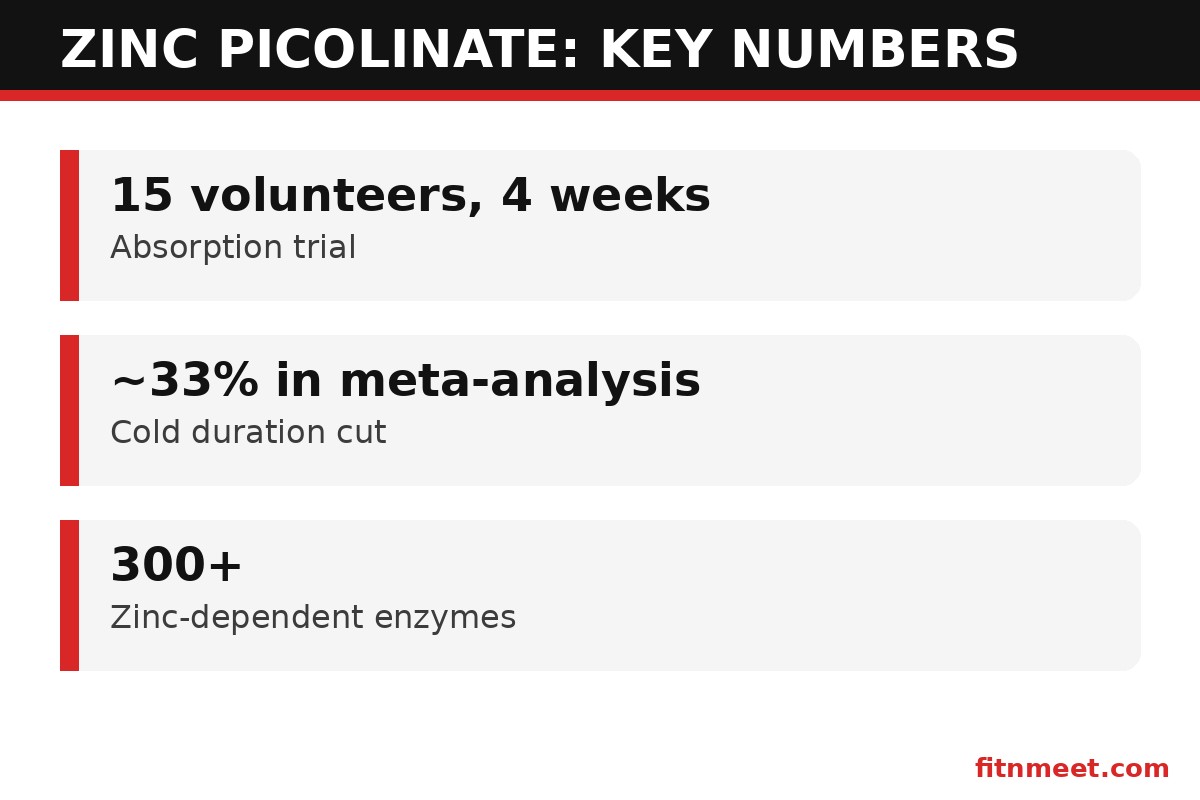
Zinc itself is an essential trace mineral involved in more than 300 enzymatic reactions in the human body, covering immune defense, protein synthesis, DNA synthesis, cell division, and wound healing. The body does not store zinc the way it stores iron, so a steady dietary supply matters. According to the U.S. National Institutes of Health Office of Dietary Supplements, the recommended dietary allowance (RDA) is 11 mg per day for adult men and 8 mg per day for adult women, rising to 11–12 mg during pregnancy and lactation. You can read the full breakdown on the NIH zinc fact sheet.
Zinc deficiency is more common than most people realize. Global estimates suggest around 17% of the world’s population may be at risk of inadequate zinc intake, with higher rates among vegetarians, vegans, older adults, athletes who sweat heavily, and people with digestive disorders that impair absorption. Signs of deficiency include frequent infections, slow wound healing, hair loss, impaired taste or smell, and skin problems. This is the context in which this chelated form earned its reputation: as a well-absorbed, practical way to close the gap.
Why Zinc Picolinate Matters: Zinc and Human Health
Not all zinc supplements behave the same way in the body, and that is precisely why this particular chelate deserves its own guide. Zinc oxide, the cheapest form, is poorly absorbed. Zinc sulfate is effective but notorious for stomach upset. Chelated forms — where zinc is bound to an amino acid or organic acid — were developed to improve tolerance and uptake. Zinc picolinate sits in this chelated family alongside zinc bisglycinate and zinc methionine.
The claim that zinc picolinate absorbs better than other forms rests largely on one landmark study. In 1987, Barrie and colleagues published a double-blind, four-period crossover trial in the journal Agents and Actions involving 15 healthy volunteers. Each participant took 50 mg of elemental zinc per day as zinc picolinate, zinc citrate, zinc gluconate, or a placebo, for four weeks per arm. The researchers measured zinc in hair, urine, and erythrocytes (red blood cells) — tissue markers considered more meaningful than serum zinc, which fluctuates with recent meals and stress.
The result: only zinc picolinate produced a statistically significant increase in zinc levels across all three tissue markers, while zinc gluconate and zinc citrate did not differ meaningfully from placebo in this trial. The proposed mechanism is that picolinic acid forms a stable complex with zinc that crosses the intestinal brush border more readily and resists binding by dietary inhibitors such as phytates. This single study has limitations — small sample, short duration, no isotopic tracers — but it remains the most cited head-to-head human comparison and the reason zinc picolinate is marketed as a superior-absorption form.
For background on the mineral itself, Wikipedia’s zinc article covers its biological roles in detail. And if you want to understand the carrier molecule, picolinic acid is described there as a tryptophan catabolite involved in mineral absorption.
To understand mineral competition, see why iron is important.
Zinc Picolinate Benefits: What the Research Shows
Most clinical research on zinc’s benefits used forms like zinc sulfate, gluconate, or acetate rather than this chelate specifically. The benefits below are benefits of correcting zinc status — which is what this supplement is designed to do — supported by trials on zinc generally.
Immune support and the common cold
Zinc is essential for the development and function of immune cells including neutrophils, natural killer cells, and T-lymphocytes. A widely cited 2017 meta-analysis by Harri Hemilä found that zinc lozenges providing more than 75 of elemental zinc per day shortened common-cold duration by about 33% when started within 24 hours of symptom onset. While lozenge doses are much higher than typical daily supplemental doses, the finding underscores zinc’s role in antiviral defense. Maintaining adequate zinc status year-round with a daily zinc picolinate supplement is the preventive side of the same coin.
For complementary immune support, see our vitamin D3 benefits and safe dosing.
Skin health and acne
Zinc regulates oil-gland activity, calms inflammation, and supports skin repair. In a double-blind trial of 56 acne patients, 12 weeks of zinc sulfate treatment led to significant improvement in 58% of participants, with measurable
reductions in papules, pustules, and cysts. This chelated form is often preferred over sulfate for skin purposes because it is gentler on the stomach at the sustained daily doses used for skin support.
If hair shedding is your main concern, hair growth vitamins with biotin and zinc combine zinc with biotin in a daily gummy.
Hormonal health in men
Zinc is concentrated in the prostate and testes and is required for testosterone synthesis. A classic 1996 study by Prasad and colleagues found that young men placed on a zinc-restricted diet experienced a significant drop in serum testosterone, which recovered after zinc repletion. For men with low dietary zinc — common among heavy trainers who lose zinc through sweat — a daily supplement providing 15–30 mg of elemental zinc is a straightforward way to protect hormonal status.
Wound healing and recovery
Zinc-dependent enzymes drive collagen synthesis and cell proliferation during tissue repair. Clinical nutrition guidelines routinely include zinc repletion for patients with slow-healing wounds or pressure injuries. Athletes dealing with frequent skin abrasions, or anyone recovering from surgery, may benefit from ensuring zinc intake meets at least the RDA — and this form’s absorption profile makes it an efficient choice.
Taste, smell, and appetite
Zinc deficiency famously dulls taste and smell (hypogeusia and hyposmia). The original rationale for the Barrie trial was that picolinic acid enhances zinc uptake in taste-disorder patients, and follow-up work found it effective for zinc-deficient taste disorders. If food has started tasting flat, low zinc is one of the first things worth checking.
How to Take Zinc Picolinate (Step-by-Step)
- Pick the right dose on the label. Choose a product that states elemental zinc clearly — 15 mg for maintenance, 22–30 mg if you suspect low intake. Avoid products that only list the weight of the picolinate compound.
- Time it away from blockers. Take zinc picolinate 1–2 hours apart from iron supplements, calcium-rich meals, and high-phytate foods (unsoaked whole grains, legumes), which can reduce absorption.
- Decide on empty stomach vs. with food. It absorbs best on an empty stomach but can cause nausea in sensitive people. If nausea occurs, take it with a small low-phytate snack rather than abandoning supplementation.
- Pair it with copper awareness. Zinc and copper compete for absorption. If you supplement above 25 mg of zinc daily for more than a few weeks, consider a diet rich in copper (nuts, seeds, shellfish, dark chocolate) or a balanced multimineral.
- Stay consistent for 4–8 weeks. Tissue zinc markers in the Barrie trial shifted over four weeks. Give the routine at least a month before judging effects on skin, immunity, or energy.
- Reassess, don’t supplement blindly forever. After 2–3 months, evaluate symptoms and diet. Many people do well cycling it or dropping to a maintenance dose once status is restored.
For a broader look at mineral timing and stacking strategies, browse the FitnMeet nutrition articles alongside the vitamins and minerals collection in the shop.
For safe product sourcing, see our guide on how to buy vitamins online safely.
Zinc Picolinate Dosage: How Much Do You Need?
Supplement labels for this form already express dose as elemental zinc, which simplifies things:
| Goal | Typical zinc picolinate dose (elemental zinc) | Notes |
|---|---|---|
| Daily maintenance | 15 mg | Covers the RDA for most adults with diet on top |
| Correcting suspected low intake | 22–30 mg | Common capsule size; stay under the 40 mg UL |
| Short-term therapeutic use | 30–40 mg | Only for weeks, ideally with medical guidance |
| Upper limit (UL) | 40 mg/day | Do not exceed chronically without supervision |
The 40 mg tolerable upper intake level applies to total zinc from food plus supplements. Consistently exceeding it raises the risk of copper deficiency, which can cause anemia and neurological symptoms. This is the single most important safety number for anyone using zinc picolinate long term.
Special populations should adjust: vegetarians and vegans may need up to 50% more zinc than the RDA because phytates in plant foods inhibit absorption — a group for whom the better-absorbed picolinate form makes particular sense. Older adults, pregnant women, and people with Crohn’s disease or ulcerative colitis should discuss dosing with a clinician. Children should use pediatric formulations, not adult capsules.
Zinc Picolinate Side Effects and Safety
It is well tolerated at recommended doses, but no supplement is side-effect free:
- Nausea and stomach discomfort — the most common complaint, especially on an empty stomach. Taking it with food usually resolves it.
- Copper depletion — chronic high-dose zinc (above 40 mg/day for months) can induce copper deficiency, leading to anemia, low white blood cells, and nerve symptoms. Keep zinc-to-copper intake roughly balanced over time.
- Metallic taste and mouth irritation — occasionally reported, usually transient.
- Drug interactions — zinc can reduce absorption of certain antibiotics (quinolones, tetracyclines) and the rheumatoid arthritis drug penicillamine. Separate it from these medications by 2–4 hours.
- Immune suppression at very high doses — paradoxically, megadose zinc (hundreds of mg) can impair immune function rather than help it. More is not better.
This form is considered safe in pregnancy at RDA-level doses, but pregnant or breastfeeding women should not exceed the UL without medical advice. Anyone with Wilson’s disease (a copper metabolism disorder) should only use zinc under specialist supervision.
For copper depletion concerns, see our zinc and copper balance guide.
Zinc Picolinate vs Other Zinc Forms: Comparison
| Form | Elemental zinc % | Absorption evidence | Stomach tolerance | Best for |
|---|---|---|---|---|
| Zinc picolinate | ~21% | Best in 4-week human crossover trial (hair, urine, RBC zinc) | Good | Correcting deficiency efficiently |
| Zinc bisglycinate | ~14–20% | Strong; amino-acid chelate | Excellent | Sensitive stomachs |
| Zinc citrate | ~31% | Moderate; no edge over placebo in Barrie trial | Good | Budget-friendly daily use |
| Zinc gluconate | ~14% | Moderate; widely used in lozenges | Good | Cold lozenges, general use |
| Zinc sulfate | ~23% | Good | Poor — nausea common | Clinical repletion under supervision |
| Zinc oxide | ~80% | Poor — largely unabsorbed orally | Fair | Topical creams, not oral use |
The practical takeaway: if your goal is raising zinc status efficiently, the picolinate form has the best-published head-to-head absorption data. If your stomach is sensitive, zinc bisglycinate is a close alternative. Avoid zinc oxide for oral supplementation — its high elemental percentage is misleading because so little is absorbed.
Alternatives to Zinc Picolinate
Supplements are not the only route to adequate zinc. Food-first options include:
- Oysters — the richest source by far; six medium oysters provide roughly 32 mg of zinc.
- Red meat — a 3 oz serving of beef supplies about 7 mg.
- Pumpkin seeds — 1 oz delivers around 2.2 mg plus magnesium.
- Lentils and chickpeas — useful but pair with soaking/sprouting to reduce phytates.
- Zinc bisglycinate or citrate supplements — if zinc picolinate does not suit you, these are reasonable substitutes with decent evidence.
Soaking, sprouting, and fermenting grains and legumes can meaningfully improve zinc absorption from plant foods — a strategy worth combining with any zinc picolinate routine if you eat mostly plants.
Support Your Mineral Foundation
Explore FitnMeet’s sports nutrition and vitamin range and read more in the health support collection to build a supplement routine around solid fundamentals.

Frequently Asked Questions
Is zinc picolinate better absorbed than other zinc forms?
In the best-known head-to-head human trial (Barrie et al., 1987), 15 volunteers took 50 mg of elemental zinc daily as picolinate, citrate, gluconate, or placebo for four weeks each. Only zinc picolinate significantly raised zinc levels in hair, urine, and red blood cells. This suggests superior absorption and tissue retention, though the study was small and modern isotopic-tracer confirmation is still limited.
How much zinc picolinate should I take per day?
Most adults do well with 15 mg of elemental zinc daily for maintenance or 22-30 mg daily when correcting low intake. Do not exceed 40 mg of total daily zinc (food plus supplements) long term without medical supervision, as chronic excess can deplete copper.
Should I take zinc picolinate on an empty stomach?
It absorbs best on an empty stomach, but it can cause nausea in some people. If that happens, take it with a small, low-phytate snack. Avoid taking it at the same time as iron or calcium supplements, which compete for absorption.
How long does zinc picolinate take to work?
Tissue zinc markers shifted within four weeks in the landmark absorption trial. For noticeable effects on skin, immunity, or taste, allow 4-8 weeks of consistent daily use, then reassess whether you still need supplementation.
Can zinc picolinate cause copper deficiency?
Yes, if taken at high doses (above 40 mg/day) for months, because zinc and copper compete for the same absorption pathways. Keep long-term doses moderate and eat copper-rich foods like nuts, seeds, and shellfish, or use a balanced multimineral.
Is zinc picolinate safe during pregnancy?
It is considered safe at RDA-level doses (11-12 mg/day) during pregnancy, since zinc needs rise in pregnancy. Do not exceed the 40 mg upper limit without a clinician’s guidance, and prefer prenatal formulations designed for pregnancy.
Conclusion
Zinc picolinate stands out among zinc supplements because it has the strongest published head-to-head absorption data: in a controlled human crossover trial, it was the only form to significantly raise zinc in hair, urine, and red blood cells over four weeks. For the estimated millions of people with suboptimal zinc intake — athletes, vegetarians, older adults — a daily dose of 15–30 mg of this chelated zinc is a practical, well-tolerated way to protect immunity, skin, hormonal health, and recovery, provided you respect the 40 mg daily upper limit and keep copper intake in balance. Browse FitnMeet’s vitamin and mineral essentials to support your foundation.
This article is for informational purposes only and is not medical advice. Consult a healthcare professional before starting any supplement.