Vitamin C gummies are chewable supplements delivering ascorbic acid — the water-soluble vitamin behind collagen formation, immune function, and iron absorption — in a flavored gelatin or pectin base. A typical serving provides 60–250 mg, offering a palatable alternative to tablets for people who struggle to swallow pills.
What Are Vitamin C Gummies? (With Mechanism)
Vitamin C gummies package ascorbic acid (or its mineral salts, such as sodium ascorbate) into a chewable candy-like matrix. The active ingredient is identical to what you would find in a tablet: L-ascorbic acid, a six-carbon lactone that the human body cannot synthesize and must obtain from diet or supplements. What differs is the delivery vehicle — gelatin or plant-based pectin, sweeteners, flavorings, and colorings that make the dose taste like fruit instead of medicine.
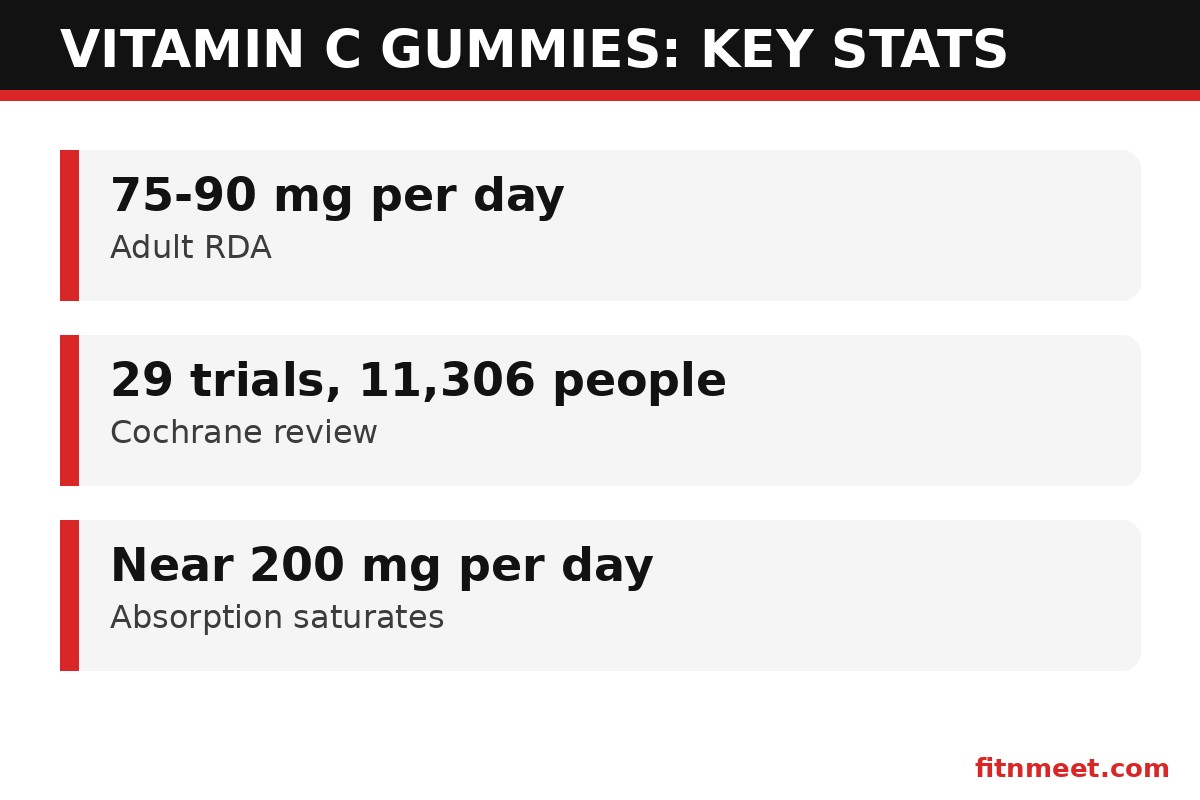
The mechanism begins in the small intestine, where vitamin C is absorbed through sodium-dependent vitamin C transporters (SVCT1). These transporters saturate at intakes around 200 mg per day — a crucial detail. Below that threshold, absorption efficiency is high (70–90%); above it, efficiency falls sharply, and excess is excreted in urine. This is why megadoses mostly produce expensive urine rather than proportionally higher blood levels.
Once absorbed, vitamin C distributes through the body water, concentrating in tissues with high metabolic demand: the adrenal glands, pituitary, white blood cells, eyes, and brain. The total body pool in a well-nourished adult is roughly 1,500 mg. It acts as an electron donor — an antioxidant — neutralizing free radicals generated during energy metabolism and immune responses, and it serves as a cofactor for the enzymes that build collagen, carnitine, and norepinephrine.
Typical vitamin C gummies deliver their dose in 1–2 chews. A single gummy commonly contains 60–125 mg; “high potency” versions reach 250–500 mg per serving. The trade-off for palatability is sugar: most gummies carry 2–4 grams of added sugars per serving, plus the well-known stability issue — vitamin C degrades with heat, light, and time, so gummies stored in warm conditions may contain less than the label claims by the end of their shelf life.
What the Research Says
The evidence base for vitamin C is unusually deep — it is one of the most studied micronutrients in history. Here is what the strongest reviews actually conclude.
Finding: Regular vitamin C supplementation (≥200 mg/day) did not reduce the incidence of colds in the general population — but in 5 trials of people under heavy physical stress (marathon runners, skiers, soldiers), incidence was halved. Cold duration fell 8% in adults and 14% in children.
Sample: 29 trial comparisons, 11,306 participants.
That Cochrane finding is the single most cited result in vitamin C research, and it reframes the entire conversation: vitamin C is not a general cold shield, but it meaningfully helps people under physical stress — a category that includes hard-training athletes.
Finding: Review of the evidence concluded vitamin C supports multiple immune functions — barrier integrity, white blood cell function, and antioxidant protection during infection — and that supplementation shortens cold duration and may reduce severity.
Sample: Narrative review of human trials and mechanistic studies.
Beyond immunity, the NIH Office of Dietary Supplements summarizes the established roles: vitamin C is required to synthesize collagen (the protein behind wound healing, skin, and connective tissue), improves absorption of non-heme iron from plant foods, and functions as an antioxidant protecting cells from free-radical damage. Deficiency produces scurvy — fatigue, bleeding gums, poor wound healing — which, while rare today, underscores that the requirement is real.
Finding: In trials of ultramarathon runners — athletes experiencing extreme oxidative and immune stress — daily vitamin C supplementation cut the incidence of post-race upper respiratory infections roughly in half versus placebo.
Sample: Multiple trials of endurance athletes under race conditions.
The honest summary: vitamin C gummies deliver a genuinely essential nutrient with proven immune-supporting roles, modest cold-duration benefits, and particular relevance for athletes under heavy training stress. They do not prevent colds in the average person, and more is not better past the absorption-saturation point.
Benefits of Vitamin C Gummies
Immune support with trial backing. The 2013 Cochrane data (29 trials, 11,306 participants) and the 2017 Carr & Maggini review converge: vitamin C supports immune cell function and shortens cold duration by 8% in adults and 14% in children. For athletes training through winter, that margin matters.
Collagen synthesis for skin and connective tissue. Vitamin C is a mandatory cofactor for the enzymes that cross-link collagen fibers. Trials in wound-healing contexts consistently show adequate vitamin C status accelerates repair — relevant for lifters accumulating training microtrauma.
Iron absorption enhancement. Vitamin C converts ferric iron to the more absorbable ferrous form, improving uptake of non-heme iron from plant foods by 2–4× in some studies. For plant-based athletes, pairing vitamin C gummies with iron-rich meals is a legitimate nutritional strategy.
Antioxidant protection during heavy training. Intense exercise generates free radicals; vitamin C’s electron-donor chemistry neutralizes them. Whether this translates to faster recovery is debated — some researchers caution that blunting oxidative signals could theoretically interfere with training adaptation — but the protective role itself is undisputed.
Adherence advantage. The most underrated benefit of vitamin C gummies is behavioral: people actually take them. Compliance studies across supplement formats repeatedly show that palatable, easy formats beat “optimal” formats that sit untouched in the cupboard. A gummy taken daily outperforms a tablet taken sporadically.
Gentler on the stomach for some users. Many vitamin C gummies use buffered forms (sodium ascorbate) or lower per-gummy doses, which some people tolerate better than a single 1,000 mg tablet on an empty stomach.
How Vitamin C Works in the Body
Follow a single gummy’s payload through the body. Chewing releases ascorbic acid in the mouth; it travels to the small intestine, where SVCT1 transporters ferry it into the bloodstream — efficiently at doses under ~200 mg, wastefully above. Peak blood levels arrive within 2–3 hours.
In circulation, vitamin C concentrates where it is needed most. White blood cells (neutrophils, lymphocytes) accumulate it at 50–100× plasma levels, using it to fuel the oxidative burst that kills pathogens while protecting themselves from the same chemistry. The adrenal glands — command central for the stress response — hold some of the body’s highest concentrations, which deplete measurably during prolonged physical or psychological stress.
At the enzymatic level, vitamin C donates electrons to keep iron and copper in their reduced states inside hydroxylase enzymes — the machines that build collagen, synthesize carnitine (the fat-transport molecule), and produce norepinephrine. Without adequate vitamin C, these enzymes stall: collagen weakens (scurvy’s bleeding gums and poor healing), carnitine drops, and fatigue sets in.
Excess is handled elegantly: once tissues saturate around intakes of 200–400 mg/day, the kidneys excrete the surplus. Blood levels plateau — doubling intake from 200 to 400 mg raises plasma concentration only modestly. This saturation curve is the biochemical reason megadose vitamin C gummies offer diminishing returns.
Dosage: How Much Do You Need?
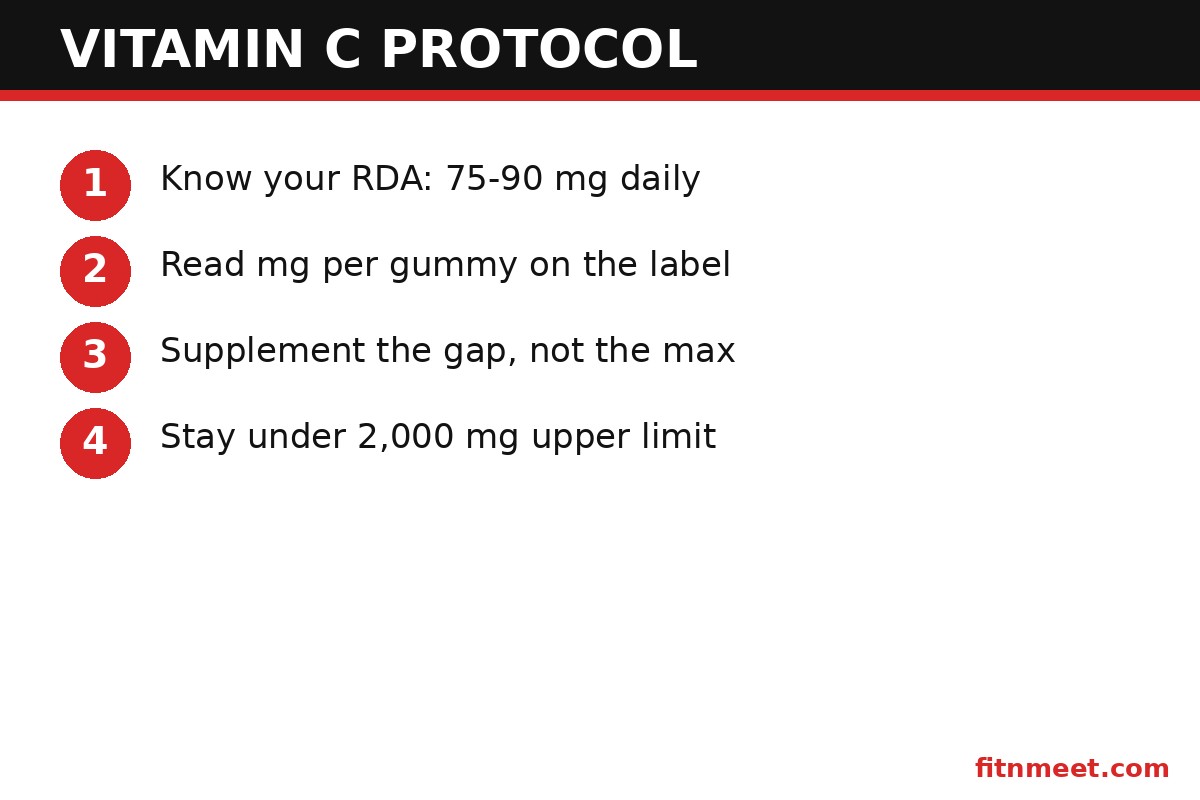
The NIH sets clear reference numbers. Follow this protocol:
- Know your RDA. Adult men: 90 mg/day. Adult women: 75 mg/day. Smokers: add 35 mg to either figure. Pregnant women: 85 mg; breastfeeding: 120 mg.
- Read the gummy label. Check milligrams of vitamin C per gummy and the serving size (often 2 gummies). A product labeled “250 mg per 2 gummies” delivers 125 mg per chew.
- Count dietary intake first. One medium orange (~70 mg), half a cup of red pepper (~95 mg), or a cup of strawberries (~85 mg) each cover most of the RDA. Many people need only a small supplemental top-up, not a megadose.
- Supplement the gap, not the maximum. If diet provides ~50 mg, one 60–100 mg gummy closes the gap. Athletes under heavy training stress may reasonably target the 200 mg/day level used in the Cochrane trials.
- Respect the upper limit. The tolerable upper intake level is 2,000 mg/day for adults. Stay well below it — benefits plateau around 200 mg, while side effects climb past 1,000 mg.
- Split larger doses. If targeting 200+ mg, split across morning and evening; absorption efficiency is higher per dose when each dose is smaller.
- Store cool and dark. Heat and light degrade ascorbic acid. A bathroom cabinet (warm, humid) is the worst storage spot; a cool pantry is better.
For most healthy adults eating some fruit and vegetables, 1 gummy (60–125 mg) daily is sufficient. There is no evidence that healthy people benefit from 1,000 mg+ daily intakes, and the saturation data argues directly against it. Our vitamins collection and nutrition guides cover complementary micronutrients.
Side Effects and Safety
Vitamin C has low toxicity — the NIH notes adverse effects are uncommon at normal intakes — but the dose makes the poison. Above 1,000–2,000 mg/day, gastrointestinal effects appear: diarrhea, nausea, abdominal cramps, and heartburn. These are the classic signs of exceeding bowel tolerance, and they resolve when the dose drops.
Kidney stone risk deserves a nuanced mention. Vitamin C metabolizes partly to oxalate, and very high intakes have been associated with increased kidney stone risk in predisposed individuals (particularly men with a history of oxalate stones). Anyone with a stone history should stay near the RDA and discuss supplementation with a clinician.
Two interactions matter. First, vitamin C enhances non-heme iron absorption — beneficial for most, but people with iron-overload conditions (hemochromatosis) should avoid high-dose supplements. Second, very high doses can interfere with certain lab tests (blood glucose, fecal occult blood), producing misleading results; mention supplementation before testing.
Gummy-specific considerations: the added sugars (typically 2–4 g per serving) matter for diabetics and strict low-sugar diets — sugar-free versions exist but often substitute sugar alcohols that cause their own GI effects. Also verify the label: independent testing has occasionally found gummy supplements containing less active ingredient than claimed, a quality-control issue that affects the format more than tablets. Buying from reputable manufacturers with third-party testing mitigates this.
Vitamin C Gummies vs Alternatives
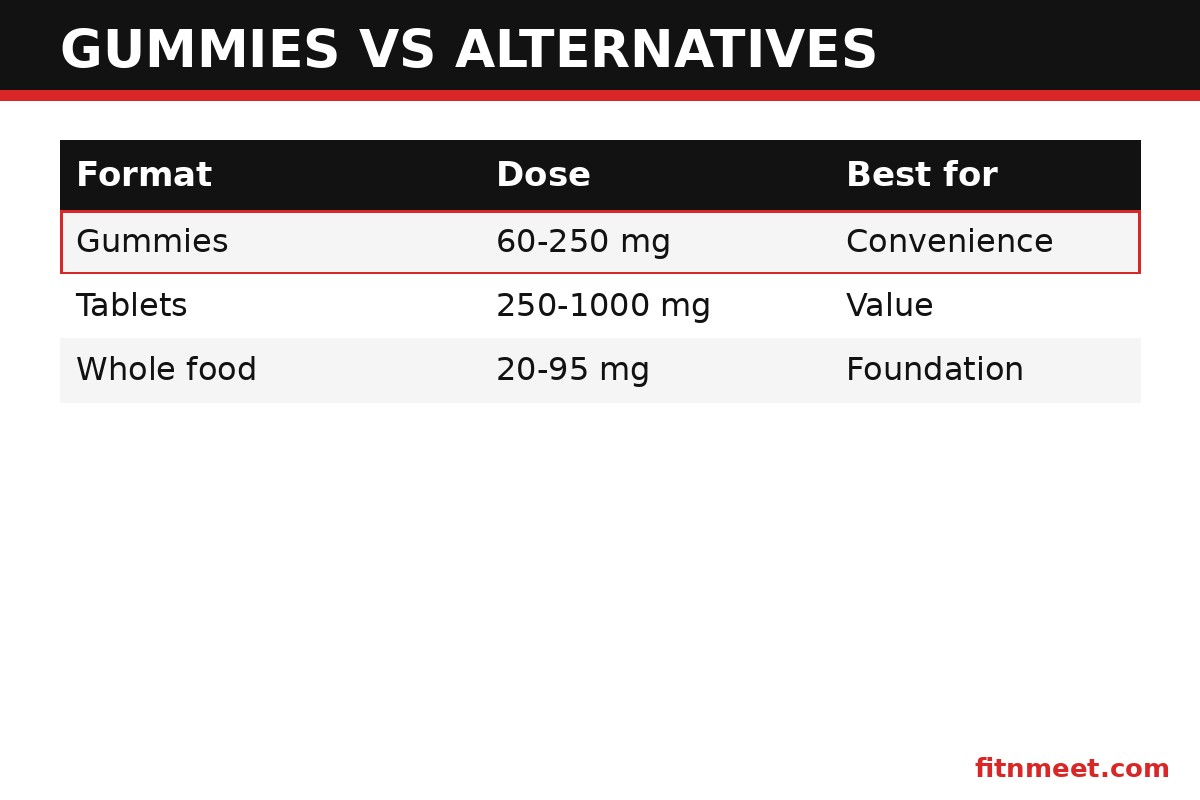
| Factor | Vitamin C Gummies | Tablets/Capsules | Powder | Whole Food |
|---|---|---|---|---|
| Typical dose | 60–250 mg/serving | 250–1,000 mg | User-measured | 20–95 mg/serving |
| Absorption | Same ascorbic acid | Same ascorbic acid | Same ascorbic acid | Best matrix + cofactors |
| Convenience | Highest — tasty, no water needed | High — needs water | Low — measuring, mixing | Requires meal prep |
| Added sugars | 2–4 g/serving typical | None | None | Natural sugars + fiber |
| Cost per 100 mg | Highest | Lowest | Low | Variable |
| Stability | Lower — heat/light sensitive | High | Moderate | N/A (fresh) |
| Best for | Pill-averse users, kids, travel | High-dose needs, value | Custom dosing | Everyone, as foundation |
The verdict from the data: whole food first, then the supplement format you will actually take consistently. Vitamin C gummies win on adherence and lose on cost and sugar; tablets win on value and dose flexibility. The molecule is identical — only the vehicle differs. Explore our health articles and blog for broader micronutrient coverage.
Vitamin C Gummies FAQ
Are vitamin C gummies effective?
Yes — vitamin C gummies deliver the same ascorbic acid as tablets, and trials show benefits for immune support and cold duration. Their main advantage is adherence: people consistently take a pleasant gummy. Check the label for actual milligrams per gummy and store them cool, since heat degrades vitamin C.
How many vitamin C gummies should I take per day?
Follow the label serving (usually 1–2 gummies, 60–250 mg total) and count dietary intake first. Most adults need 75–90 mg daily total; athletes under heavy stress may target around 200 mg. Stay well under the 2,000 mg upper limit.
Do vitamin C gummies prevent colds?
Not in the general population, per the 2013 Cochrane review of 29 trials and 11,306 participants. But in people under heavy physical stress — marathon runners, skiers, soldiers — regular supplementation halved cold incidence, and duration fell 8% in adults and 14% in children.
Are vitamin C gummies better than tablets?
The vitamin C molecule is identical; only the delivery differs. Gummies win on taste and convenience (especially for people who dislike swallowing pills) but cost more per milligram, contain added sugars, and are less stable in heat. Tablets win on value and dose precision.
Can you take too many vitamin C gummies?
Yes. Above 1,000–2,000 mg daily, vitamin C causes diarrhea, nausea, and cramps, and very high intakes may raise kidney stone risk in susceptible people. Benefits plateau around 200 mg/day due to absorption saturation, so megadosing offers no advantage.
When is the best time to take vitamin C gummies?
With a meal is ideal — food improves tolerance and vitamin C enhances iron absorption from plant foods eaten at the same meal. Splitting larger doses between morning and evening improves absorption efficiency. Avoid taking them right before bed only if the mild acidity bothers your stomach.
Do vitamin C gummies help skin?
Vitamin C is a mandatory cofactor for collagen synthesis, so adequate status supports skin integrity and wound healing. Whether extra supplementation beyond sufficiency visibly improves skin is unproven — but deficiency definitely harms it, making consistent intake worthwhile.
Conclusion
The research tells a clear, unsensational story: vitamin C is genuinely essential, modestly helpful for colds (especially in hard-training athletes), and subject to hard absorption limits that make megadosing pointless. Vitamin C gummies are a legitimate delivery format — best for people who will take them consistently, worst for anyone chasing gram-level doses on a budget. Eat your peppers and citrus, close the gap with a gummy if needed, and spend the money you save on protein.
Browse FitnMeet’s vitamins collection for quality-assured options backed by transparent labeling.
This article is for informational purposes only and is not medical advice. Consult a healthcare professional before starting any supplement.