
Zinc vitamin is an essential mineral supplement that supports immune function, wound healing, skin health, and over 300 enzymatic reactions in the body. Adults need 11 mg daily (men) or 8 mg daily (women), and a supplement providing 15–30 mg is the most common way to fill gaps — especially for people who eat little meat or seafood.
Definition: A zinc vitamin is a dietary supplement (tablet, capsule, lozenge, or liquid) that delivers elemental zinc — the same essential mineral found in food — in a measured dose, usually as zinc picolinate, gluconate, citrate, or oxide.
What Is a Zinc Vitamin?
A zinc vitamin is not actually a vitamin at all — it is an essential mineral. Your body cannot make or store zinc, so you must get it from food or a supplement every day. Zinc participates in more than 300 enzymatic reactions, touching everything from immune-cell development to protein synthesis, DNA repair, and the senses of taste and smell. When intake falls short, the effects show up fast: slower wound healing, more frequent colds, and dull taste are classic early signs.
Most zinc products list their dose as “elemental zinc” — the actual amount of zinc your body can use, not the weight of the whole compound. This matters because a 50 mg zinc gluconate tablet only delivers about 7 mg of elemental zinc, while 50 mg of zinc picolinate delivers roughly 10 mg. Always read the elemental-zinc number on the label; it is the only figure that counts toward the 11 mg (men) / 8 mg (women) daily requirement.
Who actually needs a zinc vitamin? Deficiency is uncommon in healthy omnivores, but risk runs higher for vegetarians and vegans (plant zinc is bound by phytates that cut absorption by up to 50%), older adults with low appetite, people with digestive disorders like Crohn’s or celiac disease, and heavy alcohol users. An estimated 17% of the global population is at risk of inadequate zinc intake, according to nutrition researchers — so a standalone zinc product is one of the more justifiable mineral supplements.
Why Zinc Matters for Your Body
Zinc earns its reputation as a foundational nutrient because it works at the cellular level across multiple systems at once. Unlike vitamins that tend to have one headline job, zinc is a generalist — and that is exactly why zinc shows up in immunity, skin, hormone, and recovery conversations.
Immune defense. Zinc is required for the development and function of neutrophils, natural killer cells, and T-lymphocytes — the white blood cells that fight infection. People with low zinc status get sick more often and stay sick longer. This is the best-supported reason to consider zinc supplementation: the mechanism is not speculative, it is textbook immunology, documented on the NIH Office of Dietary Supplements zinc fact sheet. For an immune-focused option that pairs zinc with elderberry, see our elderberry immune gummies with zinc.
Growth, repair, and recovery. Zinc drives protein synthesis and cell division, which is why wounds heal slowly when zinc is low. Athletes and regular lifters care about this pathway because training is controlled muscle damage — recovery nutrition that ignores zinc leaves one repair mechanism under-fueled. Your workout recovery stack should at least cover the basics before chasing exotic ingredients.
Hormones and reproductive health. Zinc is involved in testosterone production; studies on zinc-deficient men show that correcting deficiency can restore testosterone levels into the normal range. It also supports healthy sperm parameters, which is why zinc vitamin products appear in men’s health formulas so often.
Skin, hair, and senses. Dermatologists use zinc for acne management (oral zinc shows modest benefit in inflammatory acne trials), and zinc deficiency causes hair shedding and loss of taste and smell — one of the most distinctive deficiency symptoms in clinical practice. The general Wikipedia overview of zinc covers its biological roles in detail.
Benefits of a Zinc Vitamin
Here is what the evidence actually supports — zinc benefits with real research behind them, not marketing copy.
1. Shorter colds when timed right. A Cochrane review of zinc lozenges found that zinc taken within 24 hours of symptom onset can shorten common colds by roughly a day or more in some trials. The effect is tied to zinc ions in the throat, which is why lozenges — not capsules — were used in the positive studies. A zinc lozenge at the first tickle of a sore throat is the best-supported cold strategy in the mineral’s portfolio.
2. Filling genuine dietary gaps. If your diet is low in meat, shellfish, and legumes, a modest zinc vitamin dose reliably corrects marginal deficiency. Blood zinc is hard to measure accurately, so trials usually judge success by functional outcomes — fewer infections, better wound healing, restored taste. Those outcomes improve consistently in deficient populations given 15–30 mg of zinc daily.
3. Acne and skin support. Multiple randomized trials show oral zinc (typically 30 mg daily for 8–12 weeks) reduces inflammatory acne lesions, with effects comparable to some topical antibiotics in a few head-to-head studies. It is not a first-line treatment, but as an adjunct, a zinc vitamin has better evidence than most “skin gummies.”
4. Immune resilience in older adults. A well-known trial gave nursing-home residents zinc supplements and found fewer infections over the study period. Since appetite and absorption both decline with age, a zinc vitamin is one of the few supplements geriatric nutritionists routinely consider.
5. Diarrhea reduction in children. The WHO recommends zinc for childhood diarrhea in developing regions, where trials show it cuts duration by about 25%. This is a public-health benefit, not a gym benefit — but it underscores how fundamental this mineral is.
What zinc supplementation will not do: build muscle directly, burn fat, or “boost” testosterone above your natural ceiling if your levels are already adequate. Benefits cluster around correcting insufficiency, not super-dosing sufficiency.
How to Use a Zinc Vitamin
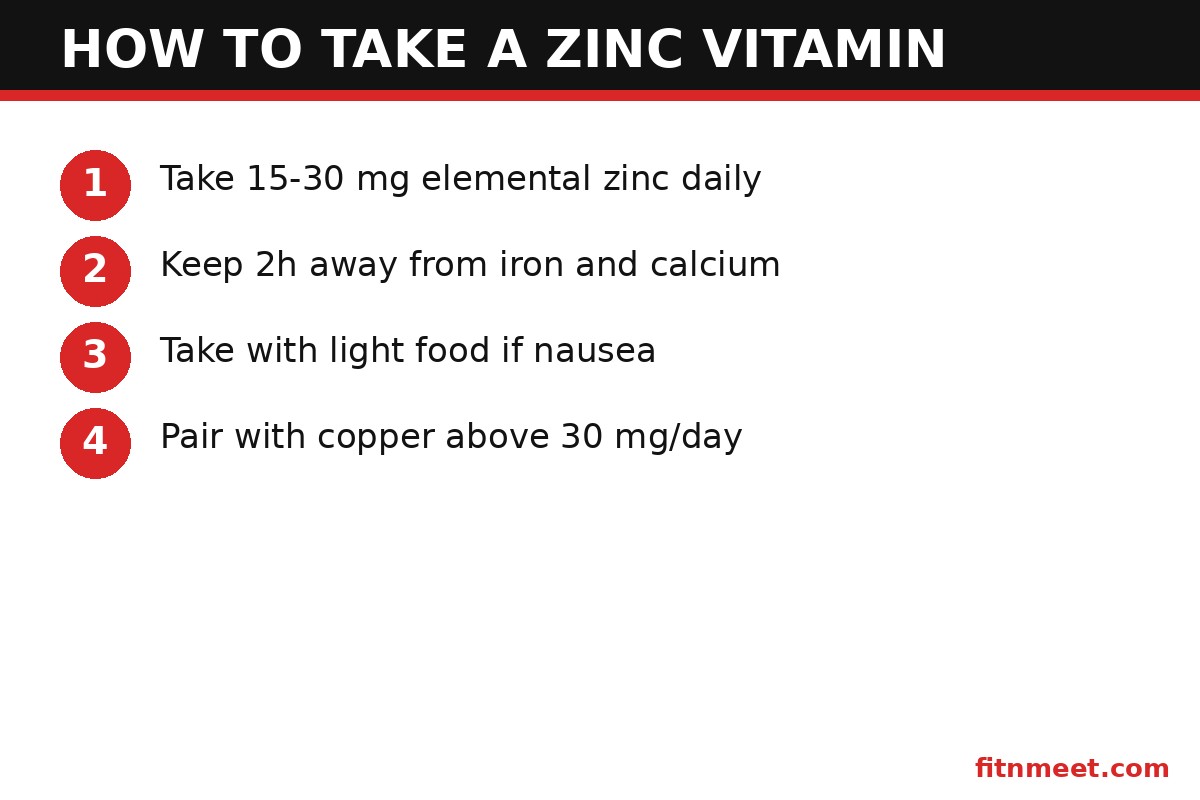
Taking zinc correctly matters more than which brand you buy. Follow these steps:
- Pick your dose first. Most adults do well with 15–30 mg of elemental zinc daily. Check the label for “elemental zinc,” not total compound weight.
- Time it away from competing minerals. Calcium and iron compete with zinc for absorption, so take zinc at least 2 hours apart from iron or calcium supplements and high-dairy meals.
- Decide on empty stomach vs. with food. Zinc absorbs best on an empty stomach, but it causes nausea in roughly 1 in 5 people that way. If you feel queasy, take it with a light, low-calcium snack — slightly lower absorption beats skipping it entirely.
- Watch out for phytates. Whole grains, legumes, and nuts contain phytates that can halve zinc absorption. If your diet is plant-heavy, take your dose between meals to sidestep the problem.
- Pair it with protein. Amino acids like histidine and methionine improve zinc uptake, which is one more reason zinc fits naturally alongside a protein-rich diet — see FitnMeet’s protein collection for the food side of that equation.
- Cycle long-term use. High-dose zinc depletes copper over months (they share absorption pathways). If you supplement above 30 mg daily for more than a few weeks, add 1–2 mg of copper or take planned breaks.
- Use lozenges for colds, capsules for maintenance. The cold-shortening evidence is specific to lozenges dissolved in the mouth. For everyday gap-filling, a standard capsule is cheaper and gentler on the stomach.
Zinc Vitamin Dosage Guide
Zinc dosage is one of the few areas where official numbers are clear and consistent. The table below combines the official reference values with the doses actually used in clinical trials.
| Group | Recommended daily intake | Common supplement dose |
|---|---|---|
| Adult men (19+) | 11 mg | 15–30 mg |
| Adult women (19+) | 8 mg | 15–25 mg |
| Pregnant women | 11–12 mg | 15 mg (ask your doctor first) |
| Breastfeeding women | 12–13 mg | 15 mg (ask your doctor first) |
| Vegetarians / vegans | Up to 1.5× the RDA* | 15–30 mg |
| Cold treatment (lozenge) | — | 75–100 mg/day elemental, ≤ 2 weeks |
*The Institute of Medicine suggests vegetarians may need up to 50% more zinc because phytates in plant foods reduce absorption.
The tolerable upper intake level (UL) is 40 mg/day for adults — the ceiling for chronic daily use. Short cold-treatment courses of higher lozenge doses are the exception, not the rule. A single daily dose in the 15–30 mg range sits comfortably below the UL while covering realistic dietary shortfalls, which is why it is the sweet spot most dietitians recommend. New to the zinc-copper interplay? Start with our zinc-copper balance guide for beginners.
Signs you might need more (or a different strategy): white spots on nails are folklore, not evidence — ignore them. Real signals include frequent infections, slow-healing cuts, persistent loss of taste, and hair shedding with no other explanation. If several apply, a zinc vitamin trial of 8–12 weeks is reasonable before reassessing.
Side Effects and Safety
Zinc is safe at recommended doses, but this is one supplement where more is genuinely worse. Know the boundaries.
Common, mild: nausea (the big one — up to 20% of people on an empty stomach), metallic taste, mild stomach cramps, and occasional diarrhea. Taking it with food resolves most of this.
Copper depletion: chronic zinc intake above 50 mg/day interferes with copper absorption, potentially causing anemia and neurological symptoms over months. This is the main reason the 40 mg UL exists. Anyone running a high-dose zinc vitamin long-term should pair it with copper or get bloodwork. For guidance on getting the ratio right, see our guide to balancing zinc with copper.
Drug interactions: zinc reduces absorption of certain antibiotics (quinolones, tetracyclines) — separate doses by 2–4 hours. Thiazide diuretics increase zinc loss in urine. Penicillamine (used for Wilson’s disease and rheumatoid arthritis) binds zinc and needs medical supervision.
Nasal zinc warning: intranasal zinc sprays have been linked to permanent loss of smell (anosmia); the FDA has warned against them. This applies to nasal products only — oral zinc vitamin capsules, tablets, and lozenges do not carry this risk.
Children, pregnant women, and anyone on prescription medication should clear a zinc vitamin with a clinician first, particularly above the RDA. More background on safe intake ranges is on the FDA’s dietary supplement resources and the Wikipedia page on zinc deficiency.
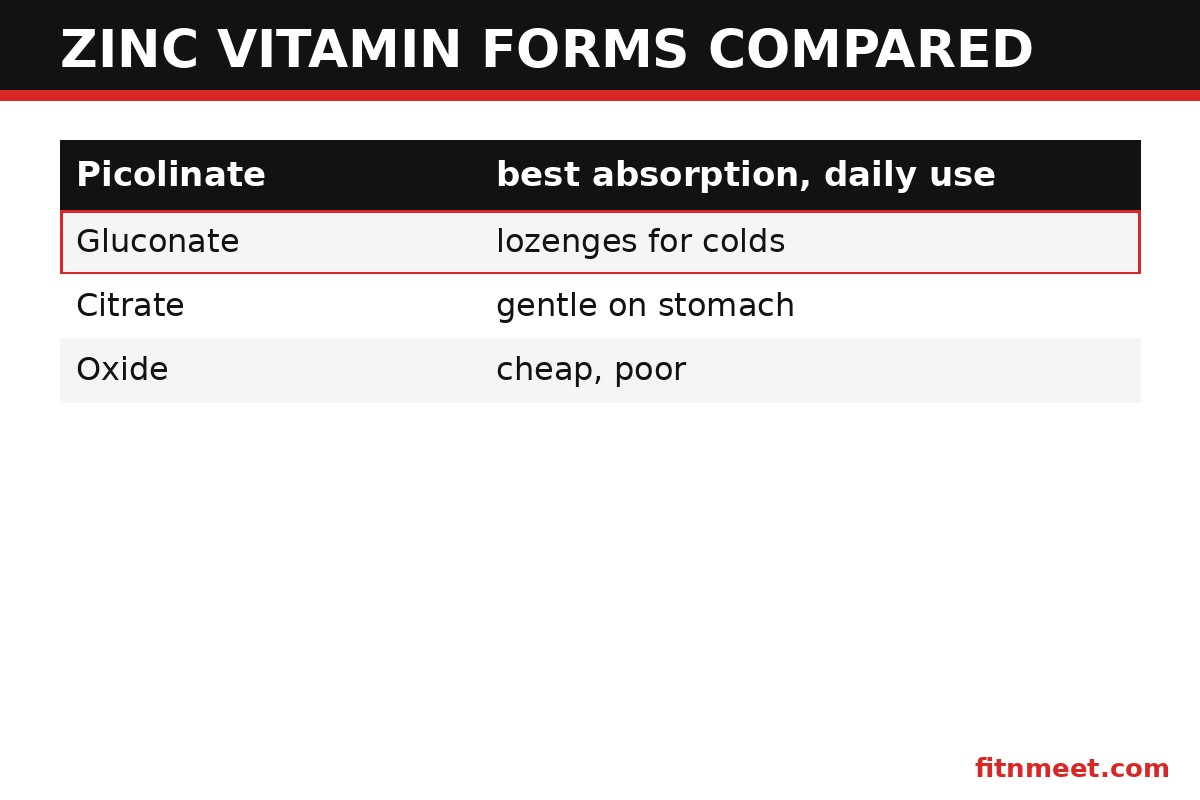
Zinc Vitamin Forms Compared
Not all zinc forms are equal. The compound on the label determines how much elemental zinc you get and how well you absorb it.
| Form | Elemental zinc | Absorption | Best for | Price |
|---|---|---|---|---|
| Zinc picolinate | ~20% | High — best-studied uptake | Daily maintenance | $$ |
| Zinc citrate | ~31% | Good, gentle on stomach | Sensitive stomachs | $$ |
| Zinc gluconate | ~14% | Moderate | Lozenges for colds | $ |
| Zinc oxide | ~80% | Low — poorly absorbed | Cheap multis only | $ |
| Zinc orotate | ~15% | Moderate, less studied | Niche preference | $$$ |
The paradox to remember: zinc oxide has the highest elemental percentage but the lowest absorption, so a cheap high-percentage zinc vitamin can deliver less usable zinc than a pricier picolinate. For daily use, zinc picolinate or citrate win on the absorption-per-dollar math. For colds, zinc gluconate or acetate lozenges win because the evidence is lozenge-specific. Check FitnMeet’s vitamins collection to see what forms are currently stocked. To dig into why this form absorbs so well, read about zinc picolinate absorption benefits.
Zinc Vitamin Alternatives
A zinc vitamin is the convenient route, but food-first is always valid. The richest food sources, per standard serving:
| Food | Serving | Zinc (mg) | % of male RDA |
|---|---|---|---|
| Oysters | 6 medium | 32 | 291% |
| Beef chuck | 100 g cooked | 8–9 | ~77% |
| Pumpkin seeds | 30 g | 2.2 | 20% |
| Lentils | 1 cup cooked | 2.5 | 23% |
| Greek yogurt | 200 g | 1.4 | 13% |
| Eggs | 2 large | 1.1 | 10% |
Six oysters deliver nearly 3 days’ worth of zinc — which is why “eat oysters” is the classic zinc advice. Practically, most people get there with a mix: red meat or poultry a few times a week, plus legumes, seeds, and dairy. If your diet already looks like that, you may not need a zinc vitamin at all. If it does not — particularly on a plant-based diet — a modest daily zinc vitamin is simpler and cheaper than overhauling every meal.
Other alternatives worth knowing: multivitamins typically include 8–15 mg of zinc (check the form — many use cheap oxide), and dedicated immune blends pair zinc with vitamin C and D. If you take a multi already, add its zinc to your daily total before stacking a standalone zinc vitamin on top.
Frequently Asked Questions
What does a zinc vitamin do for you?
A zinc vitamin supplies elemental zinc, an essential mineral involved in 300+ enzymatic reactions. Proven benefits include supporting immune-cell function, speeding wound healing, aiding skin health, and — as a lozenge taken within 24 hours of symptom onset — shortening the common cold. It corrects dietary shortfalls; it does not supercharge functions that are already adequate.
How much zinc vitamin should I take daily?
Most adults do well with 15–30 mg of elemental zinc daily from a zinc vitamin. The official RDA is 11 mg for men and 8 mg for women, and the tolerable upper limit is 40 mg per day for chronic use. Short cold-treatment courses with lozenges may use higher doses for up to two weeks.
When is the best time to take a zinc vitamin?
Zinc absorbs best on an empty stomach, but about 1 in 5 people get nausea that way. The practical answer: take your zinc vitamin with a light, low-calcium snack if your stomach is sensitive, and keep it at least 2 hours away from iron or calcium supplements and high-dairy meals.
Which form of zinc vitamin is best?
Zinc picolinate and zinc citrate offer the best absorption for daily use. Zinc gluconate or acetate lozenges are the forms with evidence for shortening colds. Zinc oxide is the cheapest but poorly absorbed — avoid it as a standalone zinc vitamin.
Can I take a zinc vitamin every day?
Yes — daily use of 15–30 mg elemental zinc is safe for most adults long-term. Above 30 mg daily for extended periods, pair it with 1–2 mg of copper, since chronic high zinc depletes copper. Stay under the 40 mg daily upper limit unless a clinician advises otherwise.
What are the side effects of a zinc vitamin?
Common side effects are nausea, metallic taste, and mild stomach cramps — mostly when taken on an empty stomach. Chronic overuse above 50 mg daily can cause copper deficiency, anemia, and lowered immunity. Nasal zinc sprays (not oral supplements) have been linked to loss of smell.
Can a zinc vitamin help with acne?
Several randomized trials show 30 mg of daily zinc for 8–12 weeks reduces inflammatory acne lesions, with effects comparable to some topical antibiotics in head-to-head studies. It works best as an adjunct to standard skincare, not a replacement for it.
Do I need a zinc vitamin if I eat meat?
Probably not. A single 100 g serving of beef provides 8–9 mg of zinc — nearly a full day’s RDA — and animal-source zinc absorbs far better than plant-source zinc. Regular meat, poultry, or seafood eaters rarely need a standalone zinc vitamin; vegetarians and vegans are the main candidates.
Conclusion
A zinc vitamin is one of the few mineral supplements with a genuinely strong evidence base: it fills real dietary gaps, supports immune function, aids wound healing and skin, and — as a lozenge — can shorten a cold caught early. The formula for success is simple: 15–30 mg of elemental zinc daily (picolinate or citrate for maintenance, gluconate lozenges for colds), taken away from iron and calcium, with food if your stomach complains, and under the 40 mg daily ceiling.
If you train hard, eat mostly plants, or catch every cold going around, a zinc vitamin is a cheap, low-risk addition to your routine. Browse FitnMeet’s shop and the health support collection to compare options — and if you are unsure whether you need one, read the nutrition guides on the FitnMeet blog before you buy.
This article is for informational purposes only and is not medical advice. Consult a healthcare professional before starting any supplement.